9.5.1. Mayer’s Multimedia Learning Theory
Mayer’s model consists of three aspects that help students learn more effectively. The first aspect is that there are two separate channels, namely audio and visual, for processing information. The second aspect is that each channel is considered to have a limited capacity to process information. The third aspect is that learning is an active process of selecting, organizing, and integrating information based on existing knowledge. Mayer (2002) explains that there are two channels used to process information, the auditory and visual channels. The auditory channel processes information in the form of sounds, and the visual channel processes visible objects. These two channels combine to process the incoming multimedia information. The short term memory is the first place where information is processed. After that, all the information (sounds and pictures) is transferred to the working memory.
The multimedia learning theory proposes that, by combining information from the two channels, the information is transferred from short-term to working memory to be processed in-depth with the help of prior knowledge, and that processing helps the information stay in the learners’ long-term memory. Mayer also stated that integrating the information with prior knowledge is significant to successfully transfer the knowledge.
Mayer discusses twelve principles that shape the design and organization of multimedia learning experiences to maximize learner comprehension. These principles are presented in the Table below.
Table 1. Mayer’s Twelve Multimedia Principles
| Principles | Implications for Multimedia Learning Design |
| Multimedia Principle | · People learn better from words and pictures than from words alone |
| Pre-Training Principle | · People learn better from new lessons when they have pre-requisite knowledge |
| Signaling Principle | · People learn better when cues that highlight the organization of the essential material are added |
| Spatial Contiguity Principle | · People learn better when corresponding words and pictures are presented near rather than far from each other on the page or screen |
| Temporal Contiguity Principle | · People learn better when corresponding words and pictures are presented simultaneously rather than successively |
| Segmenting Principle | · People learn better from a multimedia lesson is presented in user-paced segments rather than as a continuous unit |
| Personalization Principle | · People learn better from multimedia lessons when words are in conversational style rather than formal style |
| Redundancy Principle | · People learn better from graphics and narration than from graphics, narration, and on-screen text. |
| Modality Principle | · People learn better from graphics and narrations than from animation and on-screen text. |
| Coherence Principle | · People learn better when extraneous words, pictures, and sounds are excluded rather than included. |
In e-learning practice, this model can provide research-based guidelines on how best to present content with text, graphics, and audio as well as the conditions under which those guidelines are most effective. Multimedia principles are also used as a psychological basis to describe the applications for ways to improve learning through personalization techniques, coherence, and animations or how to leverage e-learning practice, online collaboration, and learner control to optimize learning.
9.5.2. Laurillards conversational model
Laurillard’s conversational model (1993, 2002) can be considered both a learning theory and a practical framework for designing conventional and distance education programs. The framework throws light upon three approaches to generating a principled teaching strategy in higher education: (a) Instructional design theory, (b) intelligent tutoring systems theory, and (c) constructivist approaches. Laurillard approaches the concept of a teaching strategy as an iterative dialogue between teacher and student focused on a topic goal. The teaching strategy has been refined into a set of requirements for any learning situation (Laurrillard, 2002, p.86):
• it must operate as an iterative dialogue
• which must be discursive, adaptive, interactive, and reflective
• and which must operate at the level of descriptions of the topic
• and at the level of actions within related tasks
These descriptions are presented in Figure 10. Teacher and student are represented as interacting through some medium —it may be a face-to-face tutorial, it may be conducted entirely through correspondence, or it may employ a combination of several media.
Teacher and student each operate at the level of descriptions of the topic goal, and actions in a task environment. The arrows represent learning and teaching activities that constitute the dialogic relationships within and between the two participants, as follows:
• The discursive process is represented as a series of activities by teacher and student at the level of descriptions of the topic goal: describing and redescribing each participant’s conception of it (activities 1–4).
• The adaptive process is represented as activities (5 and 10) internal to both teacher and student, each of whom adapts their actions at the task level in the light of the discursive process at the description level.
• The interactive process is represented as a series of activities (6 to 9) by teacher and student at the level of the task environment, setting and aiming to achieve the task goal, and giving and acting on feedback in the light of the task goal.
• The reflective process is represented as activities (11 and 12), internal to both teacher and student, each of whom reflects on the interaction at the task level to redescribe their conceptions at the level of descriptions of the topic goal.
This Conversational Framework for describing the learning process is intended to apply to any academic learning situation: to the full range of subject areas and types of topics.
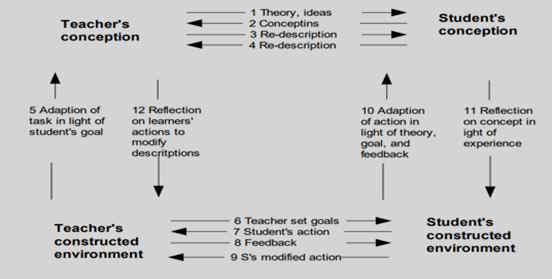
Figure 2. Laurillard’s conversational Model of e-Learning (Source: Laurillard, 2008)
Associated evaluation and design studies have to consider how different educational mediums serve the needs of principled teaching strategies. Table 2 presents a classification of educational media according to their essential pedagogical characteristics.
Table 2. A Classification of Educational Media (Sources: Laurillard, 2008)
| Media Forms | Methods/Technologies | Learning Experience |
| Narrative | · Print, TV, video, DVD | · Attending, apprehending |
| Interactive | · Library, CD, DVD, and Web resources | · Investigating, exploring |
| Communicative | · Seminar, online conference | · Discussing, debating |
| Adaptive | · Laboratory, field trip, simulation | · Experimenting, practicing |
| Productive | · Essay, product, animation, mode | · Articulating, expressing |
For learning to take place, the core structure of the Conversational Framework must remain intact in some form: The dialogue must take place somewhere, and actions must happen somewhere, even if it is all carried out by the student. All the activities identified in the Conservational model can be supported by the five forms of educational media. E-learning designers should consider which educational media can support the Conversational Framework and thereby address all the activities essential for learning in the full context of the teaching process
9.5.3. The Community of Inquiry Model
The Community of Inquiry (CoI) model was developed from a study by Garrison, Anderson, and Archer that was conducted in 2001. The Community of Inquiry theoretical framework represents a process of creating a deep and meaningful (collaborative-constructivist) learning experience through the development of three independent elements – social, cognitive, and teaching presence (Garrison, Anderson, & Archer, 2000).
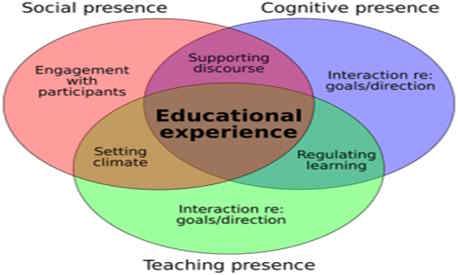
Figure 3. Elements of an educational experience (Garrison, Anderson & Archer, 2010).
According to Garrison et al. (1999), it is through the skillful of these forms of presence that online academic staff and students, in collaboration, develop a productive online learning environment through which knowledge is constructed.
Table 3. Forms of Presences According to the CoI Model (Garrison, 2007).
| Forms of Presence | Description |
| Social Presence | · Social presence is the ability of participants to identify with the community (e.g., course of study), communicate purposefully in a trusting environment, and develop interpersonal relationships by way of projecting individual personalities. |
| Teaching Presence | · Teaching Presence is the design, facilitation, and direction of cognitive and social processes to realize personally meaningful and educationally worthwhile learning outcomes. |
| Cognitive Presence | · Cognitive Presence is the extent to which learners construct and confirm meaning through sustained reflection and discourse. |
In an online learning environment, specific features of the technology can Instructional practices can be enhanced by using the CoI model and technology that can support all three presences of the framework (Chen, Lei & Cheng, 2019). Thus, the Community of Inquiry (CoI) framework has been one of the most used and researched educational frameworks
