Theoretical Background for e-Learning Design
Early back in 1994, the debate between Clark and Kozma triggered many discussions on the effects of technology use in learning. In particular, Clark (1994), claimed that “technology not only does not influence learning, but it will never influence learning, and that media is neither sufficient for nor necessary to learning” (p.23). Kozma (1994), fueled the debate, but because technology changes over time, he contended that “if we can find a relationship between media and learning then we will be able to see how technology influences learning” (p. 8). Despite technology having come of age, this debate has recurred on how networked technologies have redefined the boundaries and pedagogies of technology-based learning environments. Reflecting a general trend in educational technology toward a learner-centered paradigm (Jonassen, 2001) Ertmer and Ottenbreit-Leftwich (2013) suggests that “technology integration is no longer be achieved separately from pedagogic goals, but simply how students engage in relevant and meaningful interdisciplinary work” (p. 176). Based on this approach, the e-learning field establishes technologies not as means for content transmission but as tools to mediate interactive learning activities, support the learner and facilitate the teachings and learning process (Alman & West 2022).
9.2.1. Theories of Learning and e-Learning Design
A range of theories underpins research on technology-enhanced learning environments, and are used more intentionally in informing e-learning interventions, and explaining how these could improve teaching and learning. Rooted in epistemological frameworks for teaching and learning, the most common approaches used in e-learning environments employing theoretical perspectives ranged from cognition theory and constructivist approaches (Nardi, 1996, Papert, 1993), to Social Development Theory (Vygotsky, 1978), and connectivism (Siemens, 2008). E-learning approaches also adopt behaviorist approaches (Ajzen, 1985, Barker, 1968), distributed cognition approaches (Rogers, 1997), or Collaborativism (Harasim, 2017). A summary of the major theories and concepts of learning used in e-learning environments is provided in Table 1 and Table 2 accordingly.
Table 1. The Major Theories of Learning Used in e-Learning Environments
| Theory | Theoreticians | Learning Design Attributes |
| Behaviorism | Skinner (1963)
Watson (1976) |
· Lecture, drill and practice, rote learning, multiple choice
· Statement of the purpose of teaching as the behavior of the learner · Using cue prefixes to guide students toward behavior · Choose consequences that will reinforce behavioral achievement |
| Cognitivism | Piaget (1976)
Bandura (1977) |
· Statement of the purpose of teaching as the behavior of the learner
· Carefully relate new information to existing knowledge · Use of technical variations to guide and support student learning, including a focus on questions, high-level analogies, mnemonics, and similes |
| Constructivism | Glasersfeld (1995) | · Provide opportunities for students to solve real problems and meaningful problems
· Provide study group activities · Models and process guides build knowledge in a mutually beneficial problem-solving context |
Table 2. The Major Theoretical Concepts of Learning Used in e-Learning Environments
| Theory/Concept | Theoreticians | Learning Design Attributes |
| Sociocultural Theory of Cognitive Development | Vygotsky, (1978) | · Independent creative and reproductive cognitive and metacognitive (reflective) activities with electronic materials using a personal computer, PDA, mobile phone, DVD player, TV, and other electronic materials
· Creation of a distributed community of users (social networks), leading a common virtual learning activity and implementing creative and reproductive cognitive and metacognitive (reflective) activities · Develop educational web resources and, implement creative and reproductive cognitive and metacognitive (reflective) activities. |
| Constructionism | Papert (1980) | · Make the eLearning process engaging and exciting. Create scenarios that otherwise are impossible to create. Focus on a practical approach rather than just theory. Encourage online learners to learn from their mistakes. Allow for self-guided exploration. |
| Discovery learning | Bruner, (1961) | · Encourages active engagement, promotes motivation, promotes autonomy, responsibility, and independence, develops creativity, and problem-solving skills, and tailors learning experiences. |
| Experiential learning | (Rogers, 1969)
|
· Roleplay, gamification, case studies, simulations, and problem-solving. |
| Multiple Intelligence | Gardner (1983)
|
· Linguistic, logical/mathematical, spatial, bodily-Kinesthetic, musical, interpersonal, Intrapersonal, and naturalist. |
| Situated learning | Lave (1991)
|
· Real word context, social interactions, authentic learning, use of tools. |
| Activity theory | Leontjev (1983), Nardi (1992) | · Clarify the purpose of the activity system.
· Provide a big picture of the overall initiative. · Specify the activities to be analyzed. · Examine the role of the tools. · Address the internal and external context. · Monitor what is happening and document progress and the process. |
| Self-regulatory learning | Zimmerman (1990) | · Think-Pair-Share, Reading Reflections, Mastery Exercises, Peer Instruction, Knowledge Surveys. |
| Collaborative learning | Swan, Shen & Hiltz (2006) | · Products are co-constructed, Focus on individual goals within group goals.
· The individual constructs learning. · Learning is co-instructed, challenged, modified, agreed upon, and shared understanding. · Roles/ responsibilities are pre-defined/ imposed. |
| Community of practice | Wenger (1998) | · Information and knowledge sharing, instant feedback, and collaboration. |
Although the link to the theoretical approach used was not always clear when different technologies are involved, e-learning environments are usual frequently reported with a mixture of the main behaviorist, cognitivist, and constructivist theories and the major theoretical concepts of learning employed (Janelli, 2018, Ghislandi, 2012).
9.2.2. Pedagogical Principles for E-learning Design
It is widely recognized in the literature that although digital technologies are considered an important variable for designing more effective and purposeful e-learning systems, it is the pedagogical concepts and principles that enable learning to take place, and contribute to the achievement of learning outcomes (Debattista, 2018). Literature has allowed identifying three key ideas that guide e-learning designers in making effective choices, namely: (1) enhancing interaction, (2) promoting learning through community, and (3) facilitating active learning activities (Allman & West, 2021).
Enhancing Interaction
Interaction has long been a defining and critical component of the educational process and context (Anderson, 2003a). Anderson and Garrison (1998) described the three more common types of interaction discussed in the literature involving students (student-student, student-teacher, student-content), and extended the discussion to the other three types of interaction (teacher-teacher, teacher-content, content-content) as shown in Figure 1.
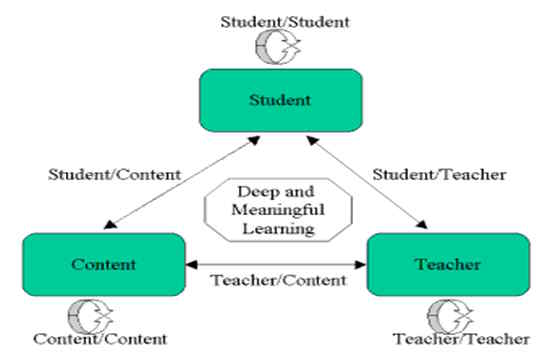
This theorem of interaction implies attempts to provide a theoretical rationale and guide for instructional designers and teachers interested in developing distance education systems that are both effective and efficient in meeting diverse student learning needs (Anderson 2003b). Thus, for planning or developing e-learning courses, designers are encouraged to build into their programs strategic amounts of each type of interaction and to develop activities that will encourage this amount of interaction. Anderson’s mode of interaction is explained briefly in Table 3.
Table 3. Anderson’s Modes of Interaction
| Modes of interaction | Implications e-learning design |
| Student-Student Interaction
|
· group projects.
· group case studies. · peer instruction. · Role-playing. · synchronous or asynchronous discussions or debates. · collaborative brainstorming. · peer review of selected work. |
| Student – Content Interaction
|
· provide an online help facility, or intelligent help, if the user is modeled and their path is traced through the information space.
· use an adaptive interface, based on several stereotypical user classes, that modifies the environment to suit the individual user. · provide adaptive advice and model users’ acquisition of knowledge through their use of the environment (including navigational use, answers to questions, and help requested), to intelligently suggest a preferred individualized path through the knowledge base. |
| Student-Teacher Interaction | · Support a large number of varieties and formats that include asynchronous and synchronous communication in text, audio, and video communications, discussion forums, or chats.
· Provide feedback on assignments, learning journals, or other reflective activities. · Send frequent announcements to summarize the previous week or describe the next week. · mentoring individual learners. · working with small groups of students assigned to help teach portions of the course (peer teaching). |
| Teacher – Content Interaction
|
· teacher’s creation of content: learning objects as well as units of study, complete courses, and associated learning activities.
· teacher-content interaction allows teachers to continuously monitor, construct, and update course content resources and activities. |
| Teacher – Teacher Interaction | · Creates the opportunity to sustain teachers with professional development and support through supportive communities.
· These interactions encourage teachers to take advantage of knowledge growth and discovery, in their subject area and within the scholarly community of teachers. |
| Content – Content Interaction
|
· Content is programmed to interact with other automated information sources to constantly refresh itself and acquire new capabilities, through updates and interaction with other content sources. |
Promoting Learning Through Community
A learning community consists of formally implemented small peer groups with a focus on active and collaborative peer learning (Brouwer, et al. 2022). The notion of a learning community as it is rooted in the principle of social constructivism is that through ongoing peer interaction in a relatively stable small group, students develop learning support relationships (Vygotsky, 1978). Previous experiences, based on social network models, revealed that the learning that evolves from learning communities is collaborative, in which the collaborative knowledge of the community is greater than any individual knowledge (Coleman, 1990).
By viewing learning as being socially constructed, Wenger (1998) provides a theoretical basis for communities of practice. According to Wagner (1998, p.1) “communities of practice are groups of people who share a concern or a passion for something they do and learn how to do it better as they interact regularly”. The essence of a community of practice is that, through joint engagement in some activity, an aggregation of people come to develop and share practices (Mayes & de Freitas, 2004). Learning in such a community of practice is known as ‘‘situated learning’’ (Wenger, 1998). The three of characteristics for communities of practice are presented in Table 4.
Table 4. The Three Elements that Constitute a Community of Practice
| Element | Description |
| The domain | A community of practice is not merely a club of friends or a network of connections between people. It has an identity defined by a shared domain of interest. Membership, therefore, implies a commitment to the domain, and therefore a shared competence that distinguishes members from other people. |
| The Community | In pursuing their interest in their domain, members engage in joint activities and discussions, help each other, and share information. They build relationships that enable them to learn from each other |
| The practice | A community of practice is not merely a community of interest–people who like certain kinds of movies, for instance. Members of a community of practice are practitioners. They develop a shared repertoire of resources: experiences, stories, tools, and ways of addressing recurring problems—in short, a shared practice. |
Goodyear (2002) described a cycle of learning, moving through phases of externalization (of tacit knowledge), sharing, discussion, refinement, and then internalization. He admitted how little is yet understood about how to design online learning spaces and places and how primitive our understanding yet of how the affordances of all the web-based learning resources should shape the design characteristics of Virtual Learning Environments. For Jones (2001), virtual communities use networked technology, especially the Internet, to establish collaboration across geographical barriers and time zones (p.51).
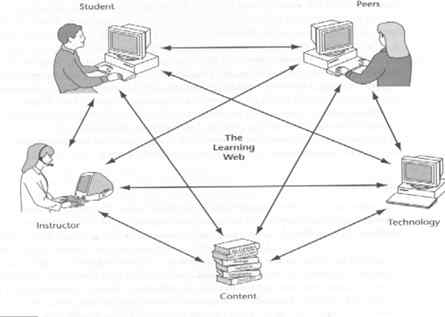
Figure 2. Elements of Communities of Practice (Source: Palloff & Pratt, 1999)
According to Pallof & Pratt (1999), virtual communities in cyberspace differ from traditional communities in several respects. The key concept of virtual communities is that they exist according to the identification of an idea or task, rather than the place. Networked communities bridge time zones and geographical locations allowing these virtual communities to exist. In particular, the Internet, or the WWW, becomes the “place” for the community, thus networked communication has increased the parameters of what is known as a community (Palloff & Pratt, 1999).
Palloff and Pratt (1999) revealed that both virtual communities and communities of practice have life cycles. They outlined the following five stages concerning the life cycle of community development, whether the community is traditional or virtual: (1) Forming, (2) norming, (3) storming, (4) performing, and (5) adjourning. Communities of practice comprise social arrangements in which individuals learn by participating in activities. Constructivist techniques (e.g., collaboration, facilitation, and ill-structured problems) enable learning to take place in communities of practice. It is long been recognized that virtual communities are organized around an activity, and they are formed as a need arises (Squire & Johnson, 2000).
Facilitating Active Learning Activities
There is a consensus in the literature that learning activities refer to the actions and operations that individuals perform to achieve the desired learning outcome mediated by educational tools (Lapre, Mukherjee, & VanWassenhove, 2000). In the context of online learning, such activities are mediated by online learning tools (Lam, 2004). Levy (2006b) defined online learning activity as ‘‘an educational procedure designed to stimulate learning by online experience utilizing online learning systems and tools” (p. 30). According to Levy, online learning activities combine the subjects (i.e., learners and professor[s]) with the online learning systems and tools, and with learning actions and operations to produce a learning outcome (see Fig. 3).
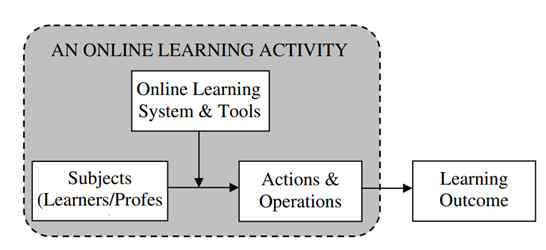
Figure 3. Human Activity in the Context of Online Learning (Source: Levy, 2006)
Jonassen and Rohrer-Murphy (1999), proposed a framework for designing constructivist learning environments based on activity theory. The activity theory is “the idea that the development of thoughts and cognitive activity requires social interaction and exchange with a physical environment (Morten et al. 2002, p. 155). Kaptelinin and Nardi (2006) explain that in technology-based learning environments “acting with technology is a phrase to position our relationship to technology as one in which people act intentionally in specific ways with technology – ways that we can study and for which we can produce effective designs” (p. 1). In the context of online learning, such actions are mediated by online learning tools (Lam, 2004). Levy (2008), listed online learning activities into five critical factors. The five factors with relative activities are presented in Table 5.
Table 5. The Five Factors Relative to Online Activities (Source: Levy, 2008)
| Factor | Activities in Online Courses |
| Collaborative, social, and passive learning activities | · Participating in chat sessions (unofficial with other students)
· Sharing my assignments with the other students (via the forum, email, etc) · Participating in chat sessions (official sessions with the professor) · Participating in live voice-chat sessions (i.e., PlaceWare, etc) · Reviewing chapters slides online · Reading other students’ assignments (i.e. via discussion forum) · Using audio/visual resources |
| Formal communication activities | · Reading feedback from the professor (via e-mail etc)
· Reviewing professor’s feedback on assignments · Sending messages to the professor · Reading the professor’s discussion forum messages · Reading information from the school’s site · Checking grades online · Register for courses online · Reading assignments’ guidelines online · Checking ‘‘myWebCT” for course(s)’ updates |
| Formal learning activities | · Replying to students’ discussion forum messages
· Posting new discussion forum messages · Reading other students’ discussion forum messages · Submitting course(s)’ assignments online · Reviewing other students’ Websites · Developing personal Website, profile, or blog · Replying to professor’s discussion forum messages |
| Logistic activities | · Download the course syllabus
· Download assignments’ guidelines · Download chapters slides · Purchasing software for the course(s) online · Upload assignments and course-related files to an online storage site. · Purchasing books, textbooks, and other course-related literature online |
| Printing activities | · Printing assignments’ guidelines
· Printing other course documents (besides assignments) · Printing course syllabus |
